
 all resources & insights
‘Be Loosely Coupled, But Tightly Cohesive’—Two CEOs Talk Purposeful Profit and the Human Side of Leadership
They say leadership is lonely at the top. But it doesn’t have to be that way. People are your most important, and most meaningful, asset. In this recap of a conversation between ConantLeadership Founder, Doug Conant, and Pariveda CEO, Margaret Rogers, the two experts discuss how to lead with people and profits in mind, the complexities of the human experience, and the ripple effect of adaptability.
People Are Your Most Important Asset
Early in her technology consulting career, Margaret Rogers began to recognize, “a certain level of dissonance,” no matter where she landed, largely because she noticed an unfortunate pattern among leaders: the prioritization of profits over people. Fascinated by the uniqueness of human dynamics in business, Rogers felt strongly that investing in people by helping them reach their full potential was a profitable endeavor. And a purposeful one too.
“People are the most important asset,” says Rogers. “There’s not a single consulting firm that . . . wouldn’t say this. And yet at the same time, the way businesses operate is contrary to that.”
It’s this disconnect—and the search for more meaning as a leader—that eventually led her to Pariveda, a 100% employee-owned consulting firm that specializes in solving complex business and technology problems.
Pariveda founder, Bruce Ballengee, had set out to cultivate a human-centric culture, which is what attracted Rogers. The firm, “had values that overlapped with my own,” she says. Rogers was appointed CEO in 2023 after 8 years in client-facing roles at the company.
Doug Conant, with 50 years of leadership experience at some of the world’s most recognizable companies, experienced a dissonance similar to Rogers’ early in his career. Exhausted by the old guard of traditional and authoritative leadership that often slighted the very people who kept the business going, Conant forged a new path for himself and for the people he went on to lead at Nabisco, Campbell Soup Company, and elsewhere.
“If you don’t show up for people, why should they show up for you?” says Conant pointedly. It’s a foundational question, one we must all face if we ever hope to expand our reach as leaders. After 50 years in leadership, Conant has found a new way to teach this concept: This year, he launched The Higher Ground Leadership Success System™, a step-by-step guide for leaders who want to stay grounded, lead through chaos, and sincerely help the people around them. The entire ‘Higher Ground’ framework and its companion email mini-course are centered on putting people first.
Respect the Nuance of the Human Experience
The complexity of the human experience teaches us that two things can be true at once. So it follows that Rogers and Conant’s non-traditional leadership approaches have been measurably successful by very traditional criteria. They’ve both led profitable, high-performance teams without sacrificing their people-first values.
“People can really be at the center and a company can operate that way profitably,” says Rogers. She wholeheartedly believes in, “the opportunity to influence our future leaders and grow talent,” while still moving with the, “discipline of all my other experiences in traditional consulting firms.”
Similarly, Conant’s wisdom to be both, “tough-minded on standards and kind-hearted with people,” embraces just how multifaceted leadership must be. Your success depends on adhering to the 12 core tenets of ‘leadership that works’: inspiring trust, humility, creativity, and kindness, to name a few. For example, are you carving out time for collaboration? Are you saying ‘thank you’ to your employees earnestly and often? Are you owning your mistakes? Conant’s ‘Dig Deep, Reach High’ email mini course is designed to help leaders decipher what this looks like on a day-to-day basis.
An important detail: Both panelists’ success formulas hinge on the power of the ‘and’—a concept brought to light by renowned leader and author Jim Collins, who famously celebrates the “genius of the ‘and.’” It’s not profits or people. It’s profits and people. The first is rooted in scarcity, while the other acknowledges the abundance of what is possible.
In other words, you don’t need to exclude discipline in favor of flexibility, or draw a line between tough and tender. It’s both. It always has been.
Don’t Be a Prisoner of Structure
Adaptability, like embracing the power of the ‘and,’ will help your organization thrive in the face of change. Rogers, who’s created a high-engagement model for employees, says her firm is “adapting all the time.”
She points to Pariveda’s unique holacracy management framework as an example. It’s a “more distributed model of empowerment,” in which employees can lead and, “determine what is needed,” for projects or tasks. “We do it a little bit more fluidly,” says Rogers, who explains that there are some areas of the company where the senior executives, “worked together to figure out who has actual decision-making rights.”
The holacratic structure helps the firm stay, “loosely coupled, but tightly cohesive,” says Rogers. “The things that make you tightly cohesive are your values, your mission, your outcomes, the way you measure.” When communicated well, they’re the glue that holds everything together so people know which path to stick to, no matter who’s making decisions in any given moment.
Conant adds that, “clear lines of communication,” help create structure and clarity, especially during the ambiguous process of adapting to a new framework. Every day, he speaks with leaders across industries and observes that, “the firms that are adapting and are succeeding are firms that have operating models that can engage constructively in all the chaos that’s beyond the four walls.”
This chaos and disruption will only continue, so to be a “prisoner of structure,” as Conant puts it, is too short-sighted. “We’ve got to be willing to change the game. There’s one old axiom that says, ‘if it’s not broken, don’t fix it.’ There’s another axiom that says, ‘if it’s not broken, break it and make it better.’”
The latter isn’t always the better option, but it can be, and a flexible leader develops the discernment to know which technique to apply and when. You need the wisdom to look at problems through a different lens because, as Rogers says, “with every disruption, there’s lots of opportunity.”
Four Tips to Weather the Storm
Conant asks Rogers what today’s leaders need to help their teams and companies weather the storms of modern leadership. She spotlights four key characteristics.
1. Show up with courage. You must have the courage to challenge others and be challenged. “Have the courage to be wrong, and the courage to listen. Because as a leader, you’re going to make some tough calls and not every single one of them is going to be correct. And sometimes, have the courage to follow.”
2. Take ownership and accountability. Do what you say you’re going to do, and do it well. “You have to be excellent at what you do, otherwise what is the value proposition?” Take Patagonia for example, another company committed to the ‘and’ between people and profit. “You might say they’re in the business of clothing . . . but they’re in the business of saving the planet. Their whole ecosystem is built on the idea that things need to be high quality with an ironclad warranty,” says Rogers. Own the mission, and weave it into everything you do.
3. Practice humility and empathy. Seek to understand where others are coming from, even if you don’t necessarily agree. Rogers tells new hires at Pariveda: “You need to have humility because you’re going to be surrounded by the most amazing people and you’re going to feel a little out of place, or you might feel behind. If you just embrace it and know that this is a learning organization and that we’re always stretching and reaching, that’s okay.”
4. Be a steward of the ecosystem. You are responsible for shaping the environment for your organization and teams. “Build a good ecosystem because that’s the thing that creates engagement—where people are willing to stay and make sacrifices, or lean in harder, or backfill somebody, or help somebody out when something’s going on at home.” Create the environment that brings out the best in others.
It all boils down to honoring and developing people, a core practice area of Conant’s newly updated Higher Ground Leadership Flywheel, which includes ten elements, all mapping to the twin pillars of ‘Depth’ and ‘Reach.’ Depth is about building trust, imbuing a growth mindset, and clarifying a higher purpose, and Reach is about leveraging all those attributes to accomplish extraordinary things. “The only way an organization is going to have an enduring proposition in this world is by becoming a learning organization with great agility,” says Conant. The people within that organization will need the skills to “move, shake, and reset. That requires training and human development.”
“Culture really matters,” says Rogers. Leaders must create a culture known for building people up rather than tearing them down. “The way we deliver for our clients . . . is not just making sure our people are developing, but also making sure our client’s people are developing and growing.” And the job disruptions caused by new technologies offer another opportunity to lead differently. Rogers says: “People need to be upskilled, not necessarily thrown to the curb.”
When your culture is built on a foundation of courage and caring, it pays off not just in profits, but in leadership legacy. A whopping 50 of the people who Conant led during his time at Nabisco and Campbell Soup Company are now CEOs themselves. He says that even leaders, “in tight budget situations,” can help their people learn and grow. “You have to be committed to it and you have to find a way,” to help others rise to the occasion because, “staying where you are is as much risk as moving in another direction,” for them and for you.
Rogers agrees and shares a closing thought: Leaders must commit to a “purpose-centered view” while understanding that the path may not always be easy or linear. “It’s definitely not for the faint of heart . . . but it is one that you can do with a lot of conviction.” When done right, you have the power to change people’s lives, “with a level of magnitude that you didn’t think possible.”
__
Ready to Live into ‘People First’ Leadership?
Doug Conant has turned everything he learned running Fortune 500 companies, across five decades, into one life and leadership success system, organized around two pillars of DEPTH and REACH. The entire system is yours to explore with our FREE, 4-week email mini-course.
Additional Resources for Pursuing the Human Side of Leadership
- LinkedIn Learning Course: Finding Your Leadership Purpose with Doug Conant
- LinkedIn Learning Course: Finding Your Leadership Vocabulary with Doug Conant
- STEPS: A Leadership Course for Administrative Professionals
- The ConantLeadership Video Library featuring conversations with top leadership luminaries like Margaret Rogers, Indra Nooyi, Bill George, Brené Brown, Amy Edmondson, and many more
- The ConantLeadership Blog: Find hundreds of resources on ‘Leadership That Works’
- The Leadership That Works Newsletter: A Monthly Roundup of the Best Leadership Resources from Around the Web
- Get the first chapter of The Blueprint: 6 Practical Steps to Lift Your Leadership To New Heights FREE
- Download the free companion workbook to The Blueprint
About the Author:  Vanessa Bradford, a featured contributor to ConantLeadership, is a freelance content writer and copywriter.
(Header Photo by Mick Haupt on Unsplash)

“Doug Conant is remarkable—and so is this work.“
– Stephen M. R. Covey
Author of The Speed of Trust
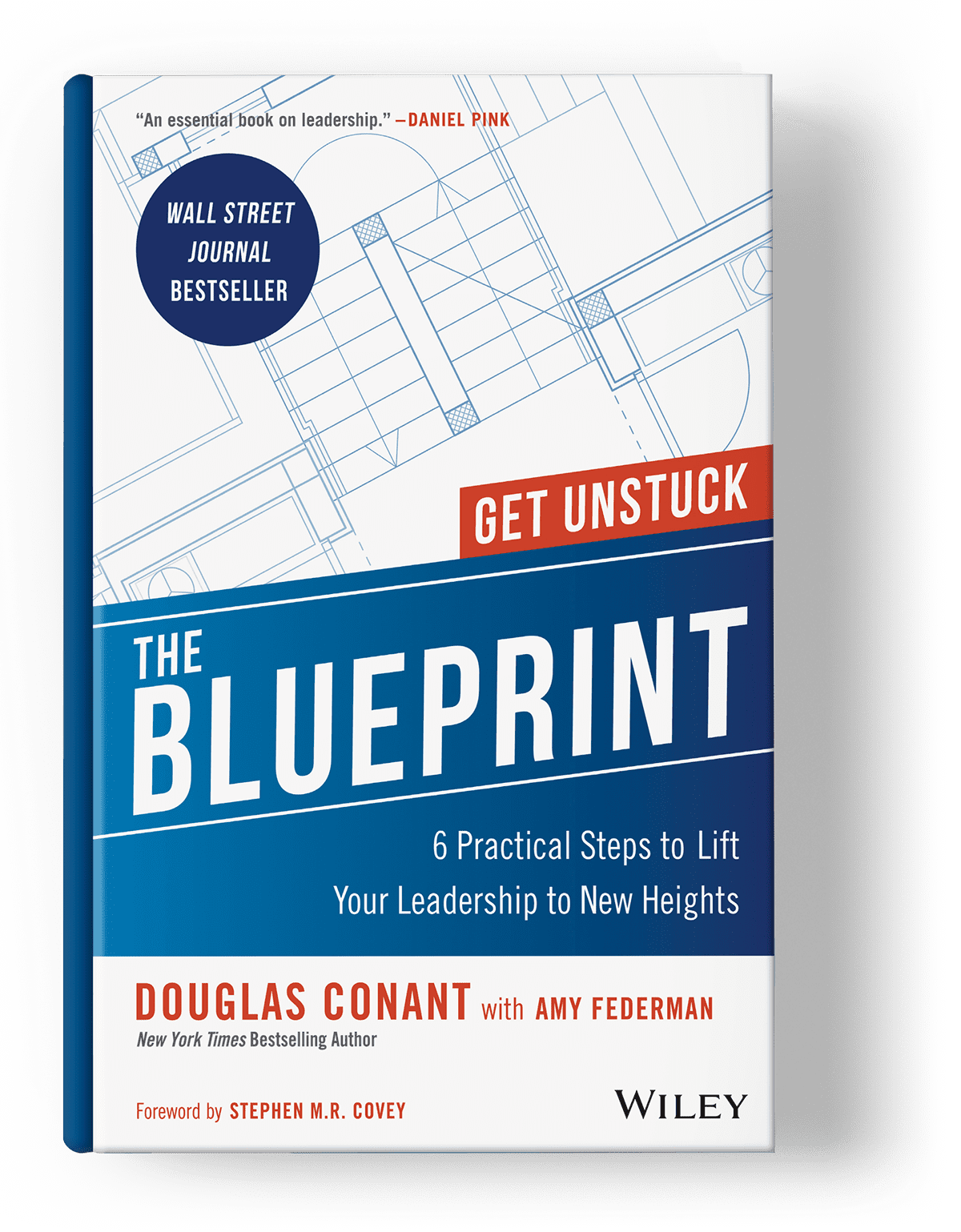
The Blueprint
6 Practical Steps to Lift Your Leadership to New Heights
By Douglas Conant with Amy Federman

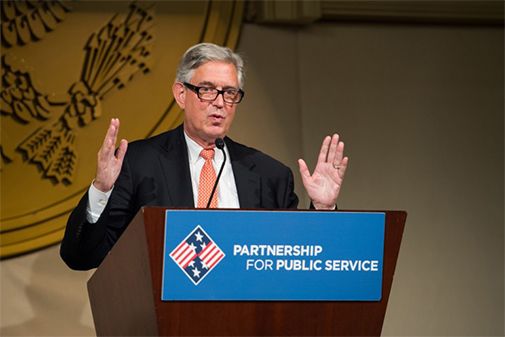
Have Doug Speak at Your Event
Doug works collaboratively with event organizers to customize his material for each audience.