
 all resources & insights
How to Be Tough and Kind – The Leadership That Works Newsletter
At ConantLeadership, we’re committed to lifelong learning and continuous improvement. In service to your leadership growth, in each month’s ‘Leadership That Works’ newsletter we curate a digest of resources from around the web to:
- Share actionable advice from top leadership luminaries
- Celebrate a range of viewpoints (inclusion is not an endorsement)
- Contextualize workplace trends through a leadership lens
- Support your personal development in life, leadership, & beyond
You can subscribe to our newsletter here.
Want to work with us to lift your or your team’s leadership to new heights? Drop us a line or talk to Emma Anthony, our Director of Leadership Programs.
In this edition of the Leadership That Works Newsletter: Meet these 4 human needs to engage employees; find the sweet spot for your strategy; how to be tough and kind; the leadership skill of the year; a playbook for de-escalating workplace conflict, and more.
New from ConantLeadership
Meet These 4 Human Needs to Engage Employees
In the latest piece in our ‘Golden Anniversary Collection,’ a treasury of thought leadership, updated to help you meet the current moment as we celebrate our Founder, Doug Conant’s, 50 years in leadership, we share the four human needs leaders must meet to engage employees: Living, Loving, Learning, and Leaving a Legacy. Find an excerpt below and then click through to read the full post.
Living: Employees must be compensated fairly in order to become or remain productive contributors. Just as you have many internal and external stakeholders to keep happy as leaders, so do your employees. They have families, communities, and responsibilities vying for their attention and support. If they’re unable to earn a living that allows them to meet the needs of their own stakeholders, they’re unlikely to be fully engaged in their work.
However, money can’t compensate for a bad work environment. Employees also need satisfactory conditions in the workplace. Many people spend just as much time (or more) at work as they do at home, so their work environment must reflect the high-quality output you hope to elicit from them. This applies in equal measure to people who work remotely too. Ensure they have all the required technology tools to perform at their best.
Get the full story here.
 Founder’s Corner: What’s Doug Enjoying?
A snapshot of resources that our Founder & CEO, Doug Conant, has recently found insightful and/or inspiring.
BOOK: Higher Ambition: How Great Leaders Create Economic and Social Value
From Doug: Recently, while we were putting the finishing touches on our ‘Higher Ground Leadership Success System,’ I had the opportunity to revisit one of my favorite leadership books, Higher Ambition by Michael Beer, Russell Eisenstat, Nathaniel Foote, Tobias Fredberg, and Flemming Norrgren.
Their inspired writing explicitly connects the creation of economic value with the creation of social value. Based on their insights in Higher Ambition, I joined them as a founding faculty and board member to create the nonprofit Higher Ambition Leadership Alliance over a decade ago. Together, we have helped hundreds of leaders aspire to a ‘higher ambition,’ leveraging many of the principles shared in their book. I highly recommend their work; it is exceptional.
How to Be Tough and Kind
One of our core values at ConantLeadership is that leaders must be, “both tough-minded on standards and kind-hearted with people.” Not either/or. Always both. In this excerpt from the new book TOUGH ENOUGH: How to Lead a Team to Greatness Without Being a Jerk, co-authors John Baird and Matt Hunter define toughness and provide actionable tips for demanding high performance without resorting to inhumane tactics.
The authors define toughness as, “the ability to commit to a mission, stay strong in the face of challenges, and push others toward excellence.” And they say it requires, “a blend of inner capacities and trainable mindsets—including mental fortitude, willingness to disagree, boldness, conviction, urgency, obsession, resilience, presence, and pain tolerance—as well as relational skills.” Baird and Hunter are also explicit about what toughness is not: “macho posturing, bullying, performative ‘hardness,’ emotional suppression, humiliation, threatening, cruelty, or personal attacks.” Through decades of studying the right kind of toughness, the kind that drives enduring success, they’ve arrived at seven habits “that define true toughness in leadership.” Here are the first three.
1. Live Your Manifesto. “Create a compelling story that inspires people to believe, belong, and go all in.”
2. Make Your Pursuit Relentless. “Sustain extraordinary focus, effort, and intensity on what matters most.”
3. Assemble a Cult of Incredibles. “Build a team of exceptional people who believe deeply in the mission and your way of working.”
Get the full story here.
**For more on how to be tough-minded and kind-hearted, explore our Higher Ground Leadership Success System, a holistic approach to organizational excellence.
Find the Sweet Spot for Your Strategy
“How ambitious should your strategic plan be? Aim too low, and you may settle for incremental gains. Aim too high, and you risk overwhelming the organization,” writes Rebecca Knight in this Harvard Business Review piece on how to calibrate your strategy to find the sweet spot. Knight talked to several business experts to crystallize eight questions, “to help you assess how high you should aim.” Here are the first four.
1. Are you solving the right problem? “Before you can judge whether your plan is ambitious enough, you have to be clear on the problem it’s solving.”
2. Are you weighing more than one kind of solution? “The pull toward conservative goals runs deep in many organizations.” To combat this, build “at least three to five distinct alternatives into your plan.”
3. How is your plan funded? “The size of a plan’s ambition shows up in how it gets funded.” Truly ambitious goals, “can’t be achieved incrementally . . . for those, the capital must come from somewhere else.”
4. Is it staffed to succeed? “Talent is a resource too, and a strategic plan can fall short if it isn’t staffed with the right people. When a plan sticks close to what you already do, it can run on the skills you and your team have.” A bold plan, however, requires, “people with different expertise and knowledge bases.”
Get the full story here.
The Leadership Skill of the Year
As we head into the final quarter of 2026, Great Place to Work asked ten top leaders and experts to name the leadership ‘skill of the year’ in this coverage. Amidst a marketplace and global discourse dominated by AI, you may expect their answers to focus on hard skills and functional intelligence. However, the majority of the polled experts named human-centric “soft” skills as their top contenders. All ten responses are compelling, and here are three standouts to get you started.
“Storytelling,”– Caroline Johns, VP of Corporate Communications, Saatva. “Major business decisions, from capital investments to growth bets, are shaped by the story behind them . . . Markets move on confidence, employees commit when they understand the ‘why,’ and context is what allows strategy to land.”
“Teamwork Design,” – Sacha Connor, CEO, Virtual Work Insider. “In 2026, a critical leadership skill is the ability to intentionally design how teamwork happens, especially as teams operate across locations, hybrid schedules, time zones, and functions . . . In complex, cross-functional environments, clarity and coordination must be designed,” and, “leaders need to establish ‘team working agreements’ that define shared goals, clarify roles, and make decision-making explicit.”
“Human Intelligence,” – Mika J. Cross, CEO, Strategy@Work. “Employers are racing towards AI adoption, but the thing that will really make the difference is ‘human intelligence.'” Cross says, “From the halls of Congress to the ranks of our military and the industry boardrooms I’ve worked with, the leaders who consistently win share these traits: they know how to turn empathy, authenticity, care, compassion, and collaboration into a true strategic advantage.”
Get the full story here.
A Playbook for De-Escalating Workplace Conflict
“Conversations that once involved healthy tension and discussion are becoming emotionally charged, reactive, and deeply personal,” writes Leah Mether in this Human Resources Director guide to de-escalating conflict. Mether says that consistent exposure to, “emotionally charged and divisive communication,” on social media and other digital platforms is spilling over into the workplace, compounded by the fact that “many people are carrying a high level of stress and uncertainty.” When emotions run high, she observes that many leaders, “get stuck,” and follow the instinct to, “shut the emotion down quickly, defend themselves, argue facts, or tell someone to ‘calm down.'” None of these are effective. Instead, Mether offers a five-step playbook for stabilizing heated interactions. Here are the first three tips.
1. Regulate yourself first. “Leaders cannot de-escalate another person if they are escalated themselves. Emotional states are contagious. If a leader responds with defensiveness, frustration or aggression, the interaction usually deteriorates quickly.”
2. Acknowledge the emotion. “People settle faster when they feel heard. That does not mean agreeing with the behavior or surrendering to the emotion. It means acknowledging it.”
3. Pair empathy with accountability. “Empathy without boundaries can allow poor behavior to continue. Boundaries without empathy can inflame the situation further. Effective leaders combine both. For example: ‘I appreciate that you’re angry right now and that’s ok. What’s not ok is to yell at a colleague like that.'”
Get the full story here.
More from ConantLeadership
50 Years of Leadership →One System for Success
Introducing the Higher Ground Leadership Success System™
ConantLeadership Founder, Doug Conant, has turned everything he learned running Fortune 500 companies, across decades, into one leadership system, organized around two pillars of DEPTH and REACH. The system is now yours to explore in a new article in Leader to Leader and in our free four-week email mini-course. Read an excerpt from the article below or click through to get the full story.
Excerpt: “In 1976, on my first day of work at General Mills, I was completely out of my depth. Oblivious to the culture of the corporate world, I roamed the halls in my tan suit, brushing my overgrown curly hair out of my eyes. I didn’t look the part of a product marketing manager, and I didn’t feel the part either. I’d moved to Minneapolis to take the job, uprooting my whole life, and I didn’t know a soul. Untethered, I was a fish out of water. As I tried to find my way through the labyrinth of office doors, a friendly older man stopped me and asked if I was lost. “Yes,” I answered, and I meant it in every sense of the word. Thankfully, he pointed me in the right direction, and that small act of kindness changed the trajectory of my entire career.” Get the full story here.
13 Life Lessons from the Game of Tennis
From our Golden Anniversary Collection
In this piece from our ‘Golden Anniversary Collection,’ Doug Conant shares pivotal lessons from his time as a young tennis pro. Find the first piece of advice below and then click through to read the full post.
1. Follow Your Passion. In the spring of 1966, I was cut during tryouts from the “freshman only” boys’ tennis team. This meant that 20 freshman boys (including most of my friends) were chosen ahead of me. It would have been easy to give up then and there, but I dedicated myself to following my passion for the sport, spending hundreds of hours practicing alone by hitting balls against walls in the neighborhood. By the next year, my competitive profile improved and I became one of the better junior players in the Midwest. I learned that passionately pouring yourself into a cause could yield substantial returns.
Get the full story here.
STEPS: A Leadership Course for Executive Assistants
This groundbreaking leadership course teaches the same 6-step BLUEPRINT process we use to train senior executives, customized for the true engine of the C-Suite: Administrative Professionals and Executive Assistants. This is leadership training powerful enough for the boardroom, but optimized for every room you’re in. Learn more.
**Want help getting your boss to pay for STEPS? We made a toolkit for that.
Find Your Leadership Vocabulary with Doug Conant
In this follow-up to our first LinkedIn Learning course, Finding Your Leadership Purpose with Doug Conant, (which has reached over 90,000 learners), join Doug in this learning pathway as he guides you through the important work of articulating your leadership beliefs and crystallizing them into a Leadership Vocabulary that you can use to influence others more effectively. Check out the course here.
August’s Leadership That Works Newsletter
In last month’s newsletter: What Dolly Parton showed us about leaving a legacy; Galbraith’s ‘Star Model’; how to build a culture that executes; the power of ‘I don’t know’; unearthing your inner genius, and more.
 About the Author: Amy Federman is ConantLeadership’s Director of Content and Editor in Chief, and co-author with Doug Conant of the WSJ bestseller, The Blueprint.
(Header photo by Kai Gradert on Unsplash)

“Doug Conant is remarkable—and so is this work.“
– Stephen M. R. Covey
Author of The Speed of Trust
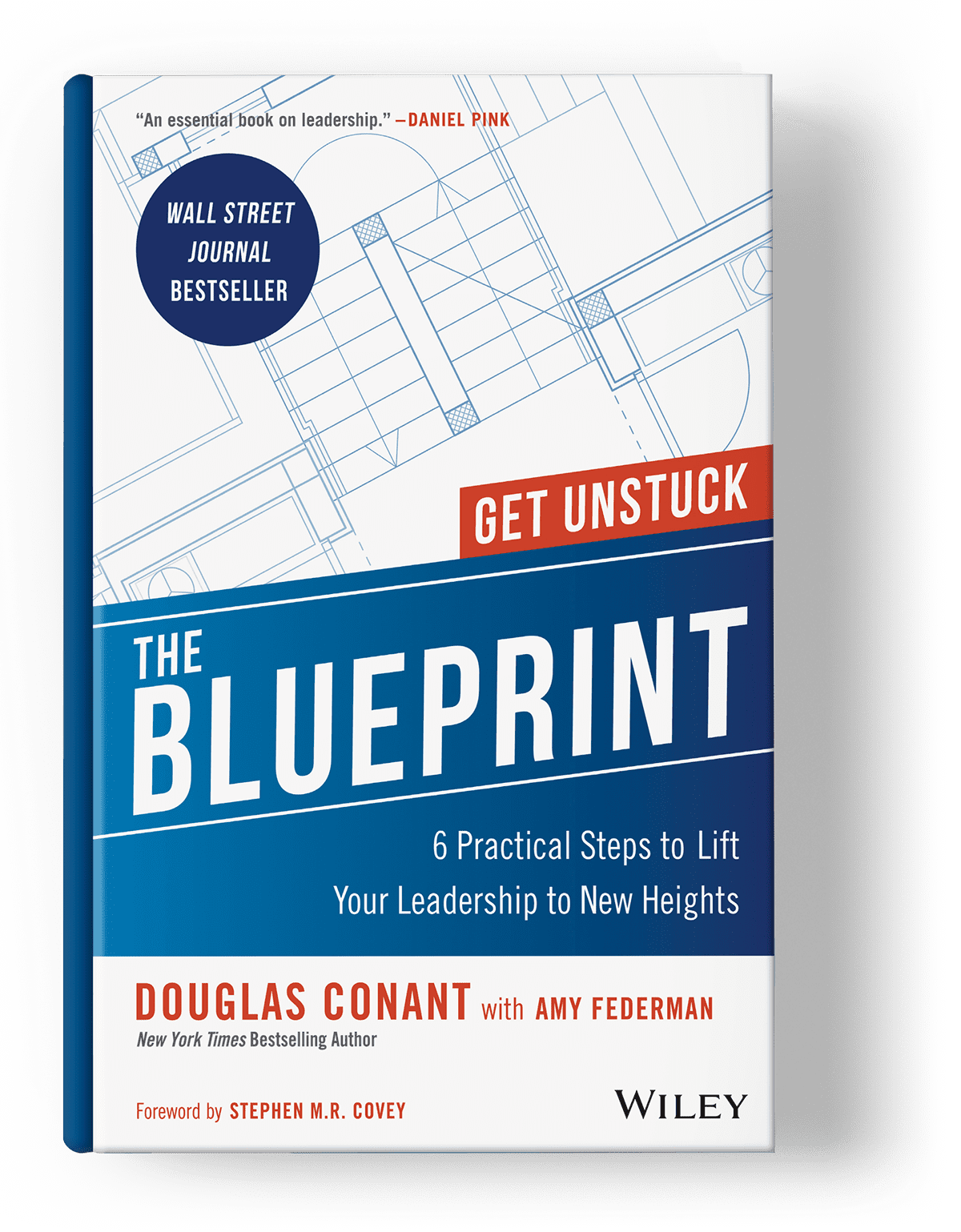
The Blueprint
6 Practical Steps to Lift Your Leadership to New Heights
By Douglas Conant with Amy Federman

Have Doug Speak at Your Event
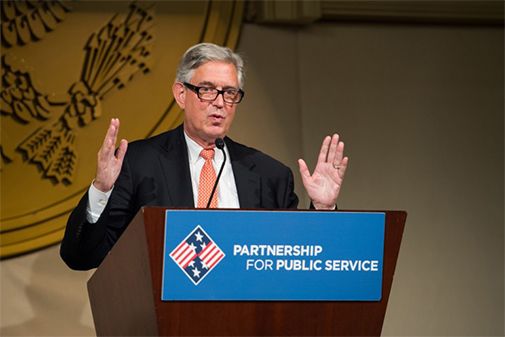
Doug works collaboratively with event organizers to customize his material for each audience.