
 all resources & insights
The Power of the Pause – The Leadership That Works Newsletter
At ConantLeadership, we’re committed to lifelong learning and continuous improvement. In service to your leadership growth, in each month’s ‘Leadership That Works’ newsletter we curate a digest of resources from around the web to:
- Share actionable advice from top leadership luminaries
- Celebrate a range of viewpoints (inclusion is not an endorsement)
- Contextualize workplace trends through a leadership lens
- Support your personal development in life, leadership, & beyond
You can subscribe to our newsletter here.
Want to work with us to lift your or your team’s leadership to new heights? Drop us a line or talk to Emma Anthony, our Director of Leadership Programs.
In this edition of the Leadership That Works Newsletter: The power of the pause, how to build ‘Superteams,’ don’t forget to celebrate wins, why leaders should think like philosophers, and more.
New from ConantLeadership
50 Years of Leadership → One System for Success
Introducing the Higher Ground Leadership Success System™
ConantLeadership Founder, Doug Conant, has turned everything he learned running Fortune 500 companies, across decades, into one leadership system, organized around two pillars of DEPTH and REACH. The system is now yours to explore in a new article in Leader to Leaderand in our free four-week email mini-course. Read an excerpt from the article below or click through to get the full story.
Excerpt: “In 1976, on my first day of work at General Mills, I was completely out of my depth. Oblivious to the culture of the corporate world, I roamed the halls in my tan suit, brushing my overgrown curly hair out of my eyes. I didn’t look the part of a product marketing manager, and I didn’t feel the part either. I’d moved to Minneapolis to take the job, uprooting my whole life, and I didn’t know a soul. Untethered, I was a fish out of water. As I tried to find my way through the labyrinth of office doors, a friendly older man stopped me and asked if I was lost. “Yes,” I answered, and I meant it in every sense of the word. Thankfully, he pointed me in the right direction, and that small act of kindness changed the trajectory of my entire career.”
Get the full story here.
Excerpt: “In 1976, on my first day of work at General Mills, I was completely out of my depth. Oblivious to the culture of the corporate world, I roamed the halls in my tan suit, brushing my overgrown curly hair out of my eyes. I didn’t look the part of a product marketing manager, and I didn’t feel the part either. I’d moved to Minneapolis to take the job, uprooting my whole life, and I didn’t know a soul. Untethered, I was a fish out of water. As I tried to find my way through the labyrinth of office doors, a friendly older man stopped me and asked if I was lost. “Yes,” I answered, and I meant it in every sense of the word. Thankfully, he pointed me in the right direction, and that small act of kindness changed the trajectory of my entire career.”
Get the full story here.
 Founder’s Corner: What’s Doug Enjoying?
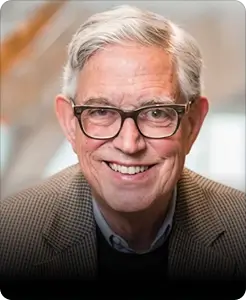
A snapshot of resources that our Founder & CEO, Doug Conant, has recently found insightful and/or inspiring.
1. ARTICLE: Laughter Is the Best Medicine from Help Guide
From Doug: “Enjoyed this piece on the health benefits of laughter. It highlights why we should consider laughing to be daily medicine for our immune system, our vital organs, our mental wellbeing, and our longevity. This is a good message for everyone and specifically for leaders because we must be intentional about infusing some lightheartedness into the work so it doesn’t become an untenable slog. That’s why I explicitly include the value of ‘Have Fun’ in my twelve essential tenets of “Leadership That Works.”
2. LINKEDIN POST: A Message about ‘Strong Ground’ by Brené Brown
From Doug: “Earlier this month, I saw this post from Brené Brown quoting the dedication in her book Strong Ground. Quite serendipitously, at the same time, in my golden anniversary year of corporate leadership, I launched my most meaningful work to date about ‘Higher Ground.’ I loved her message and was struck by a third type of ground we share: common ground. Her words are beautifully aligned with what I believe based on fifty years of practicing the art and science of leading people. Here is her message:
‘We desperately need more leaders who are committed to courageous, wholehearted leadership and who are self-aware enough to lead from their hearts, rather than unevolved leaders who lead from hurt and fear.’ Hear, hear!”
The Power of the Pause
“In a culture obsessed with decisiveness, the most effective leaders often possess a rarer ability: a tolerance for uncertainty,” writes Tony Martignetti in this Fast Company piece on the power of learning when to wait for more information before taking action. Martignetti laments that the current leadership paradigm, “treats action as the unit of measurement,” which means that “decisiveness becomes the proxy for competence,” and “speed becomes the proxy for clarity.” These attitudes do leaders a disservice. He says that “sophisticated leadership” does not always require an ability to move faster; great leaders have the capacity to move at the pace each unique situation requires. In many cases that means pausing to gather more information before proceeding with greater discernment. Martignetti says, “the ability to sit inside a situation long enough to understand it,” is sorely lacking in modern leadership. Yet the leaders who master the power of the pause are rewarded with enduring success, rather than mere short-term wins. Leaders who excel in the long term have developed the necessary awareness to “distinguish between two very different inner states that often masquerade as each other: the urge to act because the situation requires it, and the urge to act because they cannot tolerate acting.” One is reactive, and rooted in anxiety, while the other is responsive and grounded in true leadership. Get the full story here.
How to Build ‘Superteams’
What’s the secret to building teams that accomplish spectacular things without burning out or withering into dysfunction? Ron Friedman, the author of Superteams: The Science and Secrets of High-Performing Teams, shares some key tips from his lifetime of “studying human motivation” in this new book excerpt. Friedman says, “exceptional team performance isn’t a talent problem, but rather a design problem,” which means that if we “create the right conditions for people to do their best work, extraordinary results will follow.” In order to create these conditions, he places being “much more intentional” with your team’s time as the top priority
Friedman explains that “average teams make burnout inevitable,” by creating a workflow that forces most employees to spend, “18 hours a week in meetings and 11 hours digging through messages,” which accounts for the majority of their workweek, and leaves only “a little over a day” for actual work. Superteams don’t operate like this. Instead, he says Superteams are “50 percent better at avoiding unnecessary meetings,” and “54 percent less likely to schedule recurring meetings.” But the secret to success is not only about what doesn’t get scheduled e.g., frivolous meetings. Friedman says the best teams are also proactive about what does get scheduled e.g., “dedicated focus time,” and “meeting-free days when people can do deep work without being expected to respond to messages during the day.” Overall, he says the formula for winning teams boils down to this: “Minimize distractions and maximize focus.” Get the full story here.
Friedman explains that “average teams make burnout inevitable,” by creating a workflow that forces most employees to spend, “18 hours a week in meetings and 11 hours digging through messages,” which accounts for the majority of their workweek, and leaves only “a little over a day” for actual work. Superteams don’t operate like this. Instead, he says Superteams are “50 percent better at avoiding unnecessary meetings,” and “54 percent less likely to schedule recurring meetings.” But the secret to success is not only about what doesn’t get scheduled e.g., frivolous meetings. Friedman says the best teams are also proactive about what does get scheduled e.g., “dedicated focus time,” and “meeting-free days when people can do deep work without being expected to respond to messages during the day.” Overall, he says the formula for winning teams boils down to this: “Minimize distractions and maximize focus.” Get the full story here.
Don’t Forget to Celebrate Wins
“In the relentless pursuit of what’s next, many leaders overlook the importance of celebrating their wins,” writes Anna Perry in this CEO Magazine article. Perry says that, “celebration is often misunderstood in corporate environments,” because, “some leaders worry that acknowledging success may encourage complacency or reduce the urgency that drives performance.” However, this couldn’t be further from the truth. When organizations focus solely on what needs to be improved at the expense of highlighting what’s already going well, it can suck the energy out of the entire enterprise. Instead, leaders should remember that “recognition reinforces behavior.” The more leaders shine a light on successes, the more those wins compound. And each celebration creates an opportunity to analyze what led to the positive outcome, so the process can be replicated more easily in the future. Perry says, “In the same way that organizations conduct post-mortems when things go wrong, they should also conduct reflections when things go right.” Get the full story here.
**For more on this, learn how Doug Conant used handwritten thank-you notes to boost both morale and performance as CEO of Campbell Soup Company.
Why Leaders Should Think Like Philosophers
“Business leaders are increasingly called upon to make philosophical decisions. Yet few have the skills needed to navigate this new reality,” write the authors of this Harvard Business Review piece. The most obvious factor contributing to new philosophical debates is the advent of AI, but the authors say there are many other issues front-and-center, including “a lack of broadly shared and stable assumptions about society,” and a range of differing opinions “about the boundaries of acceptable speech, what counts as expertise, what companies owe their employees,” and more. The more complicated these foundational questions become, the more leaders must learn to engage with them. And they argue that a framework for engagement is sorely needed: “We believe that philosophical proficiency—the capacity to surface, question, and reason about the foundational assumptions that shape decisions—is becoming as essential to effective leadership as financial literacy.” To get leaders started, the authors provide a primer on “three key philosophical domains.”
1. Ontology.The study of being or existence. “Ontological questions ask what things really are. Most business leaders carry around a whole host of unexamined ontological assumptions; for example, about what a company is, what constitutes a free market, or what defines an employee.”
2. Epistemology.The study of knowledge. “Epistemology asks what counts as knowledge, how beliefs are justified, and how disagreements about what is true should be navigated. Leaders make epistemic judgments constantly—deciding what evidence is sufficient for action, which sources to trust, whose expertise to defer to, and what level of uncertainty is acceptable.”
3. Ethics.The study of morals or principles of behavior. “Ethics asks what is right and how competing obligations should be weighed. Ethical proficiency in the sense meant here is not corporate social responsibility . . . it is the capacity to examine what constitutes the good.”
Get the full story here.
More from ConantLeadership
In Doug’s ongoing work training leaders across industries and experience levels, he’s developed a crystal clear point-of-view about the leadership behaviors that actually work. He’s found that the very best leaders approach their work in a way that is tough-minded on standards and kind-hearted with people. They are experts at doing both: skillfully marrying the ‘head’ and the ‘heart.’ Simultaneously, they prioritize people and performance. And they do so in ways that are humble, courageous, and authentic to who they really are. Get the full story here.
3 Important Reasons Why Pressure Is a Privilege
An excerpt:Meeting our growth edge from time to time is necessary. Pressure naturally pushes us out of our comfort zone and invites us to grow.
We may feel our throats tighten and our nerves heighten when faced with the sudden opportunity to pitch a dream client, or when a new, time-sensitive project falls into our lap. But that sensation of nervous energy can also be harnessed as excitement. What a gift that we can use our unique skills, insights, and convictions to move through a novel situation creatively.
These pressurized conditions also sharpen our skills for the next challenge and improve how we lead in the spaces between. And if we do falter, as all leaders sometimes do, we’ll still be better for it. Get the full story here.
Highly Inspiring Quotes on Reaching Life & Leadership Goals
We recently updated one of our most popular quote roundups of all time with fresh content and new quotes to motivate and inspire you. Click here to get over 40 smart quotes from brilliant people across professions and spheres of influence.
Find Your Leadership Vocabulary with Doug Conant
In this follow-up to our first LinkedIn Learning course, Finding Your Leadership Purpose with Doug Conant, (which has reached over 90,000 learners), join Doug in this learning pathway as he guides you through the important work of articulating your leadership beliefs and crystallizing them into a Leadership Vocabulary that you can use to influence others more effectively. Check out the course here.
STEPS: A Leadership Course for Administrative Assistants
This groundbreaking leadership course teaches the same 6-step BLUEPRINT process we use to train senior executives, customized for the true engine of the C-Suite: Administrative Professionals and Executive Assistants. This is leadership training powerful enough for the boardroom, but optimized for every room you’re in. Learn more.
May’s Leadership That Works Newsletter
In last month’s newsletter: What endures in the face of change, lessons from getting fired, 3 questions that build resilience, the AI backlash is brewing, and more.
 About the Author: Amy Federman is ConantLeadership’s Director of Content and Editor in Chief, and co-author with Doug Conant of the WSJ bestseller, The Blueprint.

“Doug Conant is remarkable—and so is this work.“
– Stephen M. R. Covey
Author of The Speed of Trust
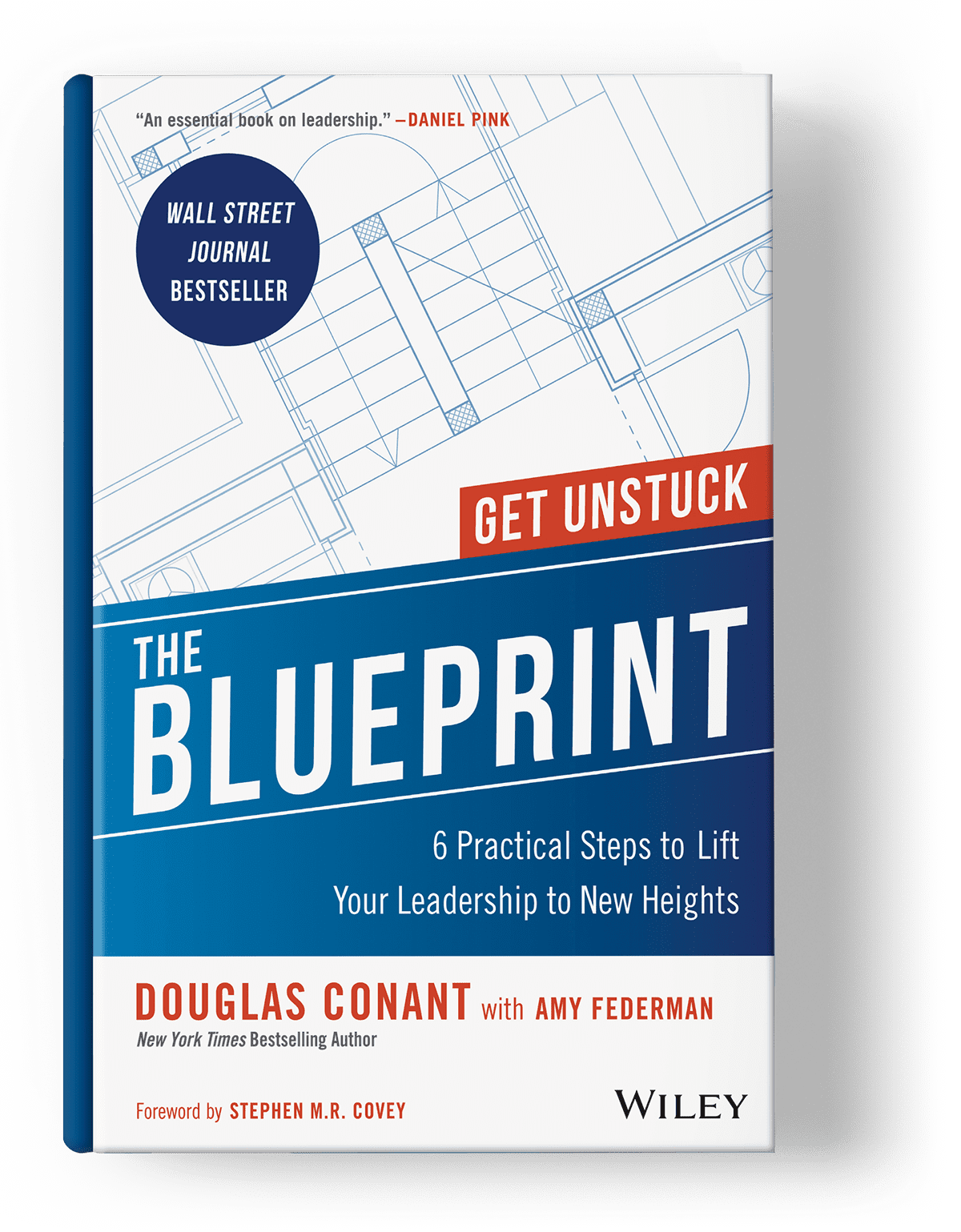
The Blueprint
6 Practical Steps to Lift Your Leadership to New Heights
By Douglas Conant with Amy Federman

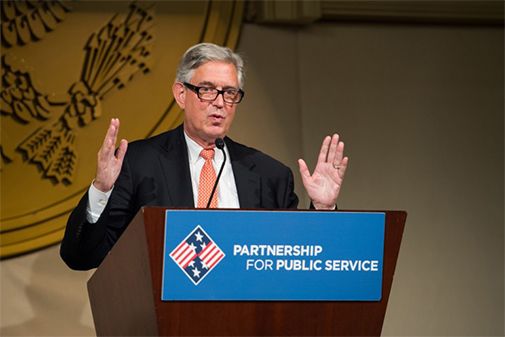
Have Doug Speak at Your Event
Doug works collaboratively with event organizers to customize his material for each audience.