
 all resources & insights
Hope Is a Leadership Skill – The Leadership That Works Newsletter
At ConantLeadership, we’re committed to lifelong learning and continuous improvement. In service to your leadership growth, in each month’s ‘Leadership That Works’ newsletter we curate a digest of resources from around the web to:
- Share actionable advice from top leadership luminaries
- Celebrate a range of viewpoints (inclusion is not an endorsement)
- Contextualize workplace trends through a leadership lens
- Support your personal development in life, leadership, & beyond
You can subscribe to our newsletter here.
Want to work with us to lift your or your team’s leadership to higher ground? Drop us a line or talk to Emma Anthony, our Director of Leadership Programs.
In this edition of the Leadership That Works Newsletter: Hope is a leadership skill; the CEO’s essential role in strategy; meaningful work depends on you; 3 questions to engage employees; and more.
How to Choose Goals That Motivate Your Team
In the latest piece in our ‘Golden Anniversary Collection,’ we share the secret to setting goals that motivate and inspire your team. Find an excerpt below and then click through to read the full post.
Excerpt: To lead your employees, organization, and community to higher ground—and to achieve the kind of success that makes you stand out as a leader—you must prioritize clarity. Your people need to know which way to go. Without that shared vision and direction, employee engagement will suffer, and so will the bottom line.
So how do you decide on a direction and communicate it effectively? How can you choose goals that motivate and inspire your team?
The key is to remember this motto: Pursue the Ideal; stay anchored in the Real. The goals that inspire engagement and activate your team should be both idealistic and realistic. By embracing the tension between the ideal and the real, you can create space for a direction that unifies, inspires, and invigorates the people around you.
Get the full story here.
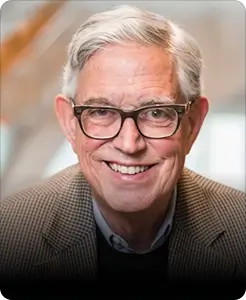 Founder’s Corner: What’s Doug Enjoying?
A snapshot of resources that our Founder & CEO, Doug Conant, has recently found insightful and/or inspiring.
BOOK: Quiet: The Power of Introverts in a World That Can’t Stop Talking
From Doug: I’ve recommended this book frequently over the past decade as it’s one of my favorites. As a fellow introvert, Cain’s book resonated with me in a meaningful way. In her engaging treatise on the unique strengths of introverts, she points out that introverts make up about a third of the world and have important gifts to share. Having lived the early part of my career halfway “locked” in my introversion and not leveraging my full capacity to contribute, Quiet stood out to me as a resource that empowers introverts to realize their full potential in the workplace and in life. This book is a winner for leaders of all types.
It’s also worth noting that it doesn’t matter whether you’re an introvert or an extrovert; virtually all leaders are managing both types so even if you’re not introverted—some of the people you are leading most definitely are—and you can benefit from the insights in this book.
Hope Is a Practical Leadership Skill
In Gallup’s 2025 Global Leadership Report, 64 percent of respondents said, “they need hope from the leaders of their organization,” writes Nikolas Badminton in this Chief Executive piece on how to become a “hope engineer.” Badminton says that hope is a practical leadership skill that can be developed and he recommends four practices to help leaders build high-hope mindsets and teams. Here are two.
Explore Multiple Pathways: “Hope is diminished the moment people believe there is only one way through and forward,” and research shows, “leaders with hope generate alternate routes quickly and treat blockers as terrain rather than verdicts.”
Make Experiments Mandatory: “High-hope organizations do not wait for certainty before acting. This is the mechanism that makes hope self-reinforcing. Movement forward creates evidence and that creates confidence,” which generates energy, “because people believe their actions matter.”
Overall, Badminton emphasizes that building hope is a “personal discipline,” that starts with you and spreads outward to your organization. Get the full story here.
The CEO’s Essential Role in Strategy
“Strategy is a team sport. Impactful work, such as developing foresight, research, ideation, analysis, and decision-making, can be distributed across the organization,” say the authors of this McKinsey analysis of the unique role a CEO plays in setting the strategic direction. The authors say, that while strategy is absolutely a team effort, there are six key areas where the CEO must take the lead and get involved; otherwise, the strategy may be at risk. Here are two.
The CEO chooses how to engage in strategy. “The CEO should be close enough to the design and delivery of strategy—the debates, decision-making, and the flow of resources to opportunities—to bring their judgment to bear on the organization’s most consequential issues.” Otherwise, “accountability for how strategy creates value can fragment when the CEO is not effectively engaged.”
The CEO owns the value creation thesis. “A great strategy rests on a clear value creation thesis: How will this company—in these markets and with these sources of advantage and vision of the future—earn returns that justify the resources committed? During the strategy’s design, many people may contribute to building that thesis. But the CEO must own the thesis and is ultimately accountable for its rigor and for ensuring its continued relevance.” This responsibility extends to earning buy-in: “Ownership is more than authorship. The CEO must build genuine conviction in the management team in the thesis and the wider strategy it explains.”
Get the full story and a deep dive into all six key CEO strategy roles here.
Meaningful Work Depends on You
On our career journeys, many of us hope to discover meaningful work along the way, and we look for that meaning externally in our roles and responsibilities. However, Mark C. Crowley writes, in this Psychology Today piece, that our quest for fulfilling work should begin inward. He says, “life experiences and natural strengths shape our optimal career path,” meaning that, “finding meaning in work depends as much on who we are as the job itself.” Crowley notes, “this makes intuitive sense,” because, “none of us leaves our personality, values, talents, and accumulated experiences at the door” when we create our career path. So leaders are well served to tap into their unique life histories in order to become “more aware of ourselves,” and to make choices, “that bring us closer to the contribution that feels right for us.” This should not be a search for perfection. Says Crowley, “any ‘perfect’ job is likely to prove elusive,” yet, “understanding ourselves well enough can help us pursue work that makes the best use of what we have to give.” Get the full story here.
**For more on this, explore our 6-step Blueprint process for transforming your life and leadership by embracing the idea that, “your life story IS your leadership story.”
3 Questions to Engage Employees
“With only 20% of workers feeling engaged globally, we need tools that can help boost engagement and well-being at work,” writes Kia Afcari in this Greater Good piece on more effectively engaging employees. Rather than passively bemoaning the challenge of engaging our workforce, Afcari says there are plenty of ways we can “take control of our work lives and bring more kindness, appreciation, connection, and trust into the workplace.” One of his recommendations is for managers to bring more intention to their one-on-one meetings with direct reports by asking these three questions:
- What are you most proud of in your work lately?
- What’s an idea, perspective, or possibility you haven’t had a chance to share yet?
- What’s a challenge you’re having or an obstacle that I can help you overcome?
Afcari adds that as leaders, “sometimes we don’t realize the impact of our time with employees,” and cites research showing that “supportive behaviors can go a long way.” These three questions are designed to help employees feel supported and heard. Get the full story here.
Introducing the Higher Ground Success System™ from ConantLeadership
ConantLeadership Founder, Doug Conant, has turned everything he learned running Fortune 500 companies, across decades, into one leadership system, organized around two pillars of DEPTH and REACH. The system is now yours to explore in an article in Leader to Leaderand in our free four-week email mini-course. Read an excerpt from the article below or click through to get the full story.
Excerpt: “In 1976, on my first day of work at General Mills, I was completely out of my depth. Oblivious to the culture of the corporate world, I roamed the halls in my tan suit, brushing my overgrown curly hair out of my eyes. I didn’t look the part of a product marketing manager, and I didn’t feel the part either. I’d moved to Minneapolis to take the job, uprooting my whole life, and I didn’t know a soul. Untethered, I was a fish out of water. As I tried to find my way through the labyrinth of office doors, a friendly older man stopped me and asked if I was lost. “Yes,” I answered, and I meant it in every sense of the word. Thankfully, he pointed me in the right direction, and that small act of kindness changed the trajectory of my entire career.” Get the full story here.
Excerpt: “In 1976, on my first day of work at General Mills, I was completely out of my depth. Oblivious to the culture of the corporate world, I roamed the halls in my tan suit, brushing my overgrown curly hair out of my eyes. I didn’t look the part of a product marketing manager, and I didn’t feel the part either. I’d moved to Minneapolis to take the job, uprooting my whole life, and I didn’t know a soul. Untethered, I was a fish out of water. As I tried to find my way through the labyrinth of office doors, a friendly older man stopped me and asked if I was lost. “Yes,” I answered, and I meant it in every sense of the word. Thankfully, he pointed me in the right direction, and that small act of kindness changed the trajectory of my entire career.” Get the full story here.
Meet These 4 Human Needs to Engage Employees
In a new piece in our ‘Golden Anniversary Collection,’ we share the four human needs leaders must meet to engage employees: Living, Loving, Learning, and Leaving a Legacy. Find an excerpt below and then click through to read the full post.
Living: Employees must be compensated fairly in order to become or remain productive contributors. Just as you have many internal and external stakeholders to keep happy as leaders, so do your employees. They have families, communities, and responsibilities vying for their attention and support. If they’re unable to earn a living that allows them to meet the needs of their own stakeholders, they’re unlikely to be fully engaged in their work.
However, money can’t compensate for a bad work environment. Employees also need satisfactory conditions in the workplace. This applies in equal measure to people who work remotely too. Ensure they have all the required technology tools to perform at their best.
Get the full story here.
13 Life Lessons from the Game of Tennis
In this piece from our ‘Golden Anniversary Collection,’ Doug Conant shares pivotal lessons from his time as a young tennis pro. Find the first piece of advice below and then click through to read the full post.
1. Follow Your Passion. In the spring of 1966, I was cut during tryouts from the “freshman only” boys’ tennis team. This meant that 20 freshman boys (including most of my friends) were chosen ahead of me. It would have been easy to give up then and there, but I dedicated myself to following my passion for the sport, spending hundreds of hours practicing alone by hitting balls against walls in the neighborhood. By the next year, my competitive profile improved and I became one of the better junior players in the Midwest. I learned that passionately pouring yourself into a cause could yield substantial returns.
Get the full story here.
STEPS: A Leadership Course for Administrative Assistants
This groundbreaking leadership course teaches the same 6-step BLUEPRINT process we use to train senior executives, customized for the true engine of the C-Suite: Administrative Professionals and Executive Assistants. This is leadership training powerful enough for the boardroom, but optimized for every room you’re in. Learn more.
**Want help getting your boss to pay for STEPS? We made a toolkit for that.
**Want help getting your boss to pay for STEPS? We made a toolkit for that.
September‘s Leadership That Works Newsletter
In last month’s newsletter: Find the sweet spot for your strategy; how to be tough and kind; the leadership skill of the year; a playbook for de-escalating workplace conflict, and more.
 About the Author: Amy Federman is ConantLeadership’s Director of Content and Editor in Chief, and co-author with Doug Conant of the WSJ bestseller, The Blueprint.

“Doug Conant is remarkable—and so is this work.“
– Stephen M. R. Covey
Author of The Speed of Trust
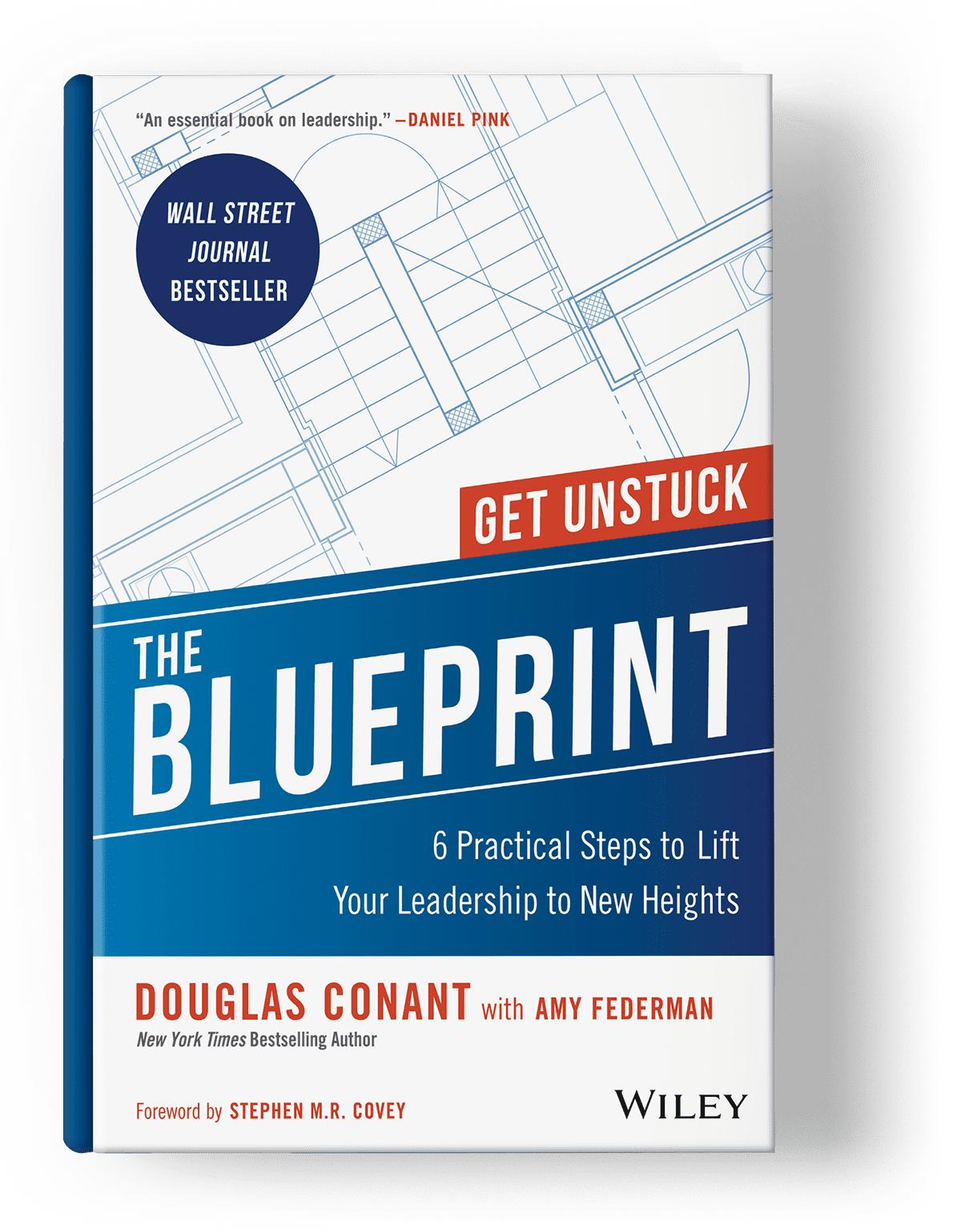
The Blueprint
6 Practical Steps to Lift Your Leadership to New Heights
By Douglas Conant with Amy Federman

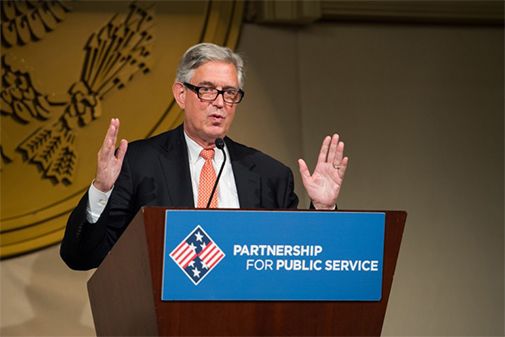
Have Doug Speak at Your Event
Doug works collaboratively with event organizers to customize his material for each audience.