
 all resources & insights
Reading the Room Is a Leadership Skill – The Leadership That Works Newsletter
At ConantLeadership, we’re committed to lifelong learning and continuous improvement. In service to your leadership growth, in each month’s ‘Leadership That Works’ newsletter we curate a digest of resources from around the web to:
- Share actionable advice from top leadership luminaries
- Celebrate a range of viewpoints (inclusion is not an endorsement)
- Contextualize workplace trends through a leadership lens
- Support your personal development in life, leadership, & beyond
You can subscribe to our newsletter here.
Want to work with us to lift your or your team’s leadership to new heights? Drop us a line or talk to Emma Anthony, our Director of Leadership Programs.
In this edition of the Leadership That Works Newsletter: Two things every leader should know, reading the room is an essential leadership skill, why you need ‘cloud’ and ‘clock’ thinking, how to be more magnetic, stop paying the ‘speed tax,’ and more.
New from ConantLeadership
 2 Things Every Leader Needs to Know

It’s Doug’s Golden Anniversary! Based on his 50 years of leadership experience, Doug is committed to taking the leadership conversation to “Higher Ground” this year. To kick off the “Golden Anniversary” celebration and whet your appetite for more insights, he shared two things every leader needs to think about in the current moment in this new blog post. The first is excerpted below and you can click through to read the second.
1. People First. There’s a famous quote from the first century Rabbi Hillel the Elder: “That which is hateful to you, do not do to your fellow human. That is the entire Torah. The rest is commentary.”
In a sense, this same principle applies to everything I’ve learned about the craft of leadership. Treat people with honor and respect. Lead with listening. Understand that it is unrealistic to expect extraordinary effort and performance without first creating a culture where people are extraordinarily valued. Especially now, with the fast-paced innovations in tech and AI, it’s essential that people do not feel dehumanized. You simply cannot win in the marketplace in an enduring way without first winning in the workplace.
Leadership is practiced by people, with people, for people. Remember this as your guiding light: People first. All the rest is commentary. Get the full story here.
 Founder’s Corner: What’s Doug Reading?
A snapshot of resources that our Founder & CEO, Doug Conant, has recently found insightful and/or inspiring.
1. QUOTE: “Our words reveal our thoughts; our manners mirror our self-esteem; our actions reflect our character; our habits predict the future.” – WILLIAM ARTHUR WARD
From Doug: I recently encountered this quote in the email signature of a friend and was inspired to share it with my team, and now with you. Ward’s words speak to the power of self-knowledge in becoming who you are meant to be, and in showing up for others in the best way possible, in work and life. Essentially, that’s what our Blueprint process is all about.
2. BOOK: “Live Life in Crescendo: Your Most Important Work Is Always Ahead of You,” By Stephen R. Covey and Cynthia Covey Haller
From Doug: This book helped trigger the thinking that has ultimately led to the most meaningful work of my life, the new ConantLeadership Higher Ground Leadership Success System™, which I will be sharing with the public in the coming months (sign up to get notified when the work goes ‘live’ here). This book encourages leaders and learners of all stripes to “live life in crescendo,” which means, “continually growing in learning, influence and contribution.” No matter your vocation or personal situation, the Coveys inspire you to “approach life with the belief that your most important work is always ahead of you.” A very worthy read.
Reading the Room Is an Essential Leadership Skill
In this Harvard Business Review piece, which analyzes why “roughly 70% of transformation efforts fail,” author Jenny Fernandez identifies the culprit: “It’s the human element,” meaning, “leaders who can’t detect resistance, misread silence as buy-in, or dismiss valid concerns as complaints.” In other words, leaders are falling short because they can’t read the room. Fernandez writes, “I see this pattern repeatedly: Organizations bring in leaders to drive change,” but without the EQ to accurately sense employee temperament, “even the strongest teams drift towards misalignment.” Thankfully, all hope is not lost. Organizations can pivot and, “close the gap between what leaders perceive and what people actually experience,” using four key strategies. Here are two.
1. Diagnose the Gap Without Making It Personal. “Executives promoted for technical expertise often score significantly lower on measures of interpersonal accuracy: the ability to correctly interpret others’ emotional states and motivations. The gap is structural, not personal. Organizations promote for one set of skills and then expect a completely different set to appear on demand.” Helping a leader develop in this area can start with a diagnostic reset, rather than labeling them as “tone-deaf.”
2. Build the Skill Through Repetition, Not Training. “Most companies respond to people-reading deficits by sending executives to emotional intelligence workshops. It doesn’t work. Research on skill acquisition and feedback-seeking supports this. Reading people accurately requires repeated exposure with immediate feedback loops. Leaders improve their interpersonal judgment most through structured reflection on real interactions, not classroom simulations.”
Get the full story here.
Why You Need Both ‘Cloud’ and ‘Clock’ Thinking
At ConantLeadership, we define leadership as “the art and science of influencing others in a specific direction.” So we were naturally drawn to this piece in KelloggInsight, adapted from insights from Julio M. Ottino, that illuminates the “recipe” for innovation: “An alliance between art and science.” The article explains that innovation thrives in cultures that are adept at “striking a careful balance between two contrasting ways of thinking—exploratory and systematic—or ‘cloud’ and ‘clock’—thinking.” Exploratory, or “clock” thinking “deals with issues that are amorphous and unpredictable.” Whereas systematic, or “cloud,” thinking “focuses on implementation and operations.” Leaders who want to cultivate innovative, high-performing organizations “must be able to build a bridge between the artists and the engineers, the discoverers and the doers.” Ottino offers three tips for marrying the art and science for greater results, and here are two.
Develop a culture of curiosity. “Curiosity and discovery should be built into the fabric of the organization, because great ideas can come from anyone involved . . . you want ideas to emerge because it’s part of the culture of the place, not because it’s dictated.”
Break down silos. “Along with providing space and encouragement to individuals so they can pursue innovative ideas, leaders also need to bring different types of thinkers together . . . connectivity is essential.”
Get the full story here.
How to Be More Magnetic
What makes the most likeable personalities stand out “isn’t status, good looks or wit,” writes Francesca Tighinean in this BigThink piece on how to develop social magnetism. Research shows the most powerful factor in building connections, especially with new people, is “interpersonal warmth,” because “for evolutionary reasons, the brain asks, ‘Can I trust this person?’ before it ever gets to, ‘Can I respect this person?'” If you’re a leader tasked with managing a new team, your warmth may matter more than your perceived competence at first. Says Tighinean: “You could be the most accomplished person in the room, but if people don’t perceive you as warm,” they won’t want to open up to you or to trust you. Luckily, there are research-backed ways to make yourself warmer and more magnetic because, “warmth isn’t a personality type, but a set of behaviors that can be learned.” Here are two of the four tips shared in the article.
Be the welcoming one. “Don’t wait to be welcomed. Be the welcomer.” Most people are “waiting to feel included, accepted, and welcomed . . . magnetic people don’t wait for that. They are the provider of it. And by focusing on making others feel welcomed, they become the most welcome person in the room.”
Expect to be liked. “When you walk into a room assuming you won’t be liked or that you’re not enough, you begin behaving in ways that make that true. The most practical way to interrupt the cycle is to replace the fear with a more accurate reading of reality. Most people in any room are not looking for someone to reject; they’re hoping to connect.”
Get the full story here.
Stop Paying the ‘Speed Tax’
“How many decisions did you make yesterday? Ten? Twenty? Fifty? Now the harder question: How many of those decisions actually moved your business forward versus simply kept you busy? Most leaders cannot answer that question with any precision,” writes Allison Dunn in this post on why relentless speed and busyness can create a false impression of forward motion. Dunn warns that “when speed becomes the default mode of operation, the distinction between motion and progress disappears. Everything feels like forward movement because everything is moving . . . but at the end of the quarter, the strategic needle has not moved as much as all that activity would suggest it should.” This paradox, the feeling of constant activity without meaningful progress to show for it, is what Dunn calls “the speed tax,” which she deems “one of the most expensive patterns in modern leadership precisely because it disguises itself as high performance.” What’s the alternative? She says leaders can stop paying the speed tax by implementing “Decision Architecture,” which is “the practice of building systems that help you recognize which decisions deserve speed and which deserve strategic pause.”
The key is understanding the difference between “one-way” and “two-way” doors.
The one-way door. “A one-way door is a decision that is difficult or impossible to reverse once made. The consequences compound from that point forward. Choosing this door commits you to a path in ways that cannot easily be undone.”
The two-way door. “A two-way door is a decision that can be revisited, revised, or reversed if the initial choice turns out to be wrong. You can walk through, test what you find, and walk back if needed. The commitment is provisional rather than permanent.”
Dunn says the most common mistake that causes the speed tax is leaders “treating one-way doors like two-way doors.” Learning to apply the appropriate speed to “reversable decisions” while slowing down to more carefully consider decisions that are harder to undo is the first step in Decision Architecture. Get the full story in Dunn’s deep-dive here.
More from ConantLeadership
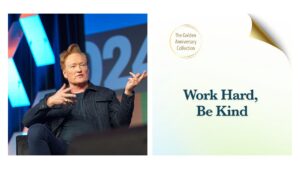 Work Hard, Be Kind
Presenting the first in our “Golden Anniversary” collection—a treasury of Doug’s thought leadership that has been updated to help YOU meet the current moment as we celebrate his 50 years in leadership. Read an excerpt below or click through to read the full post.
There’s a Conan O’Brien quote that’s stuck with me over the years: “Work hard, be kind, and amazing things will happen.” It’s an elegant distillation of one of the core beliefs in my leadership philosophy, the concept of an ‘abundant’ approach to leading people. An abundant approach means recognizing that you must simultaneously deploy more than one crucial behavior to achieve extraordinary results. It’s a both/and orientation. You can’t just work hard. And you can’t just be kind. “Amazing things” can only happen through the magic created by two elements: the tough and the tender, working together in harmony. Get the full story here.
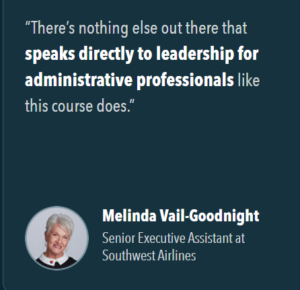 STEPS: A Leadership Course for Administrative Assistants
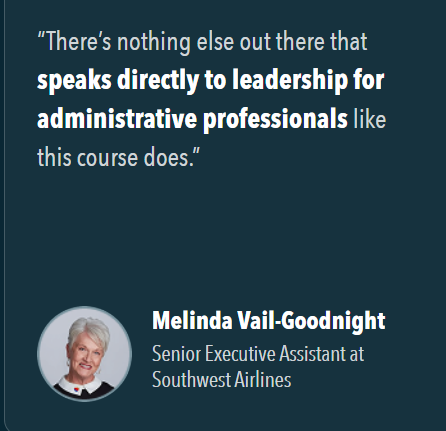
This groundbreaking leadership course teaches the same 6-step BLUEPRINT process we use to train senior executives, customized for the true engine of the C-Suite: Administrative Professionals and Executive Assistants. This is leadership training powerful enough for the boardroom, but optimized for every room you’re in. No more gatekeeping leadership skills. We’re taking elite-tier leadership training out of the corner office and into your living room, with accessible, self-paced, online programming built for real life. Learn more.
Listen: Doug on the Master Move Podcast
In this conversation, Doug talks with host Craig Gould all about how to meet the current leadership moment, the importance of an abundant “both/and” mindset, how to engage employees, and so much more. Listen here.
February’s Leadership That Works Newsletter
In last month’s newsletter: Quotes that inspire greater commitment, kindness is the highest form of intelligence, 5 core mindsets of personal growth, 100 years of Black History Month, lessons from gold medalist Alysa Liu, your leadership love language, and more.
 About the Author: Amy Federman is ConantLeadership’s Director of Content and Editor in Chief, and co-author with Doug Conant of the WSJ bestseller, The Blueprint.
(Header photo by Sasun Bughdaryan on Unsplash)

“Doug Conant is remarkable—and so is this work.“
– Stephen M. R. Covey
Author of The Speed of Trust
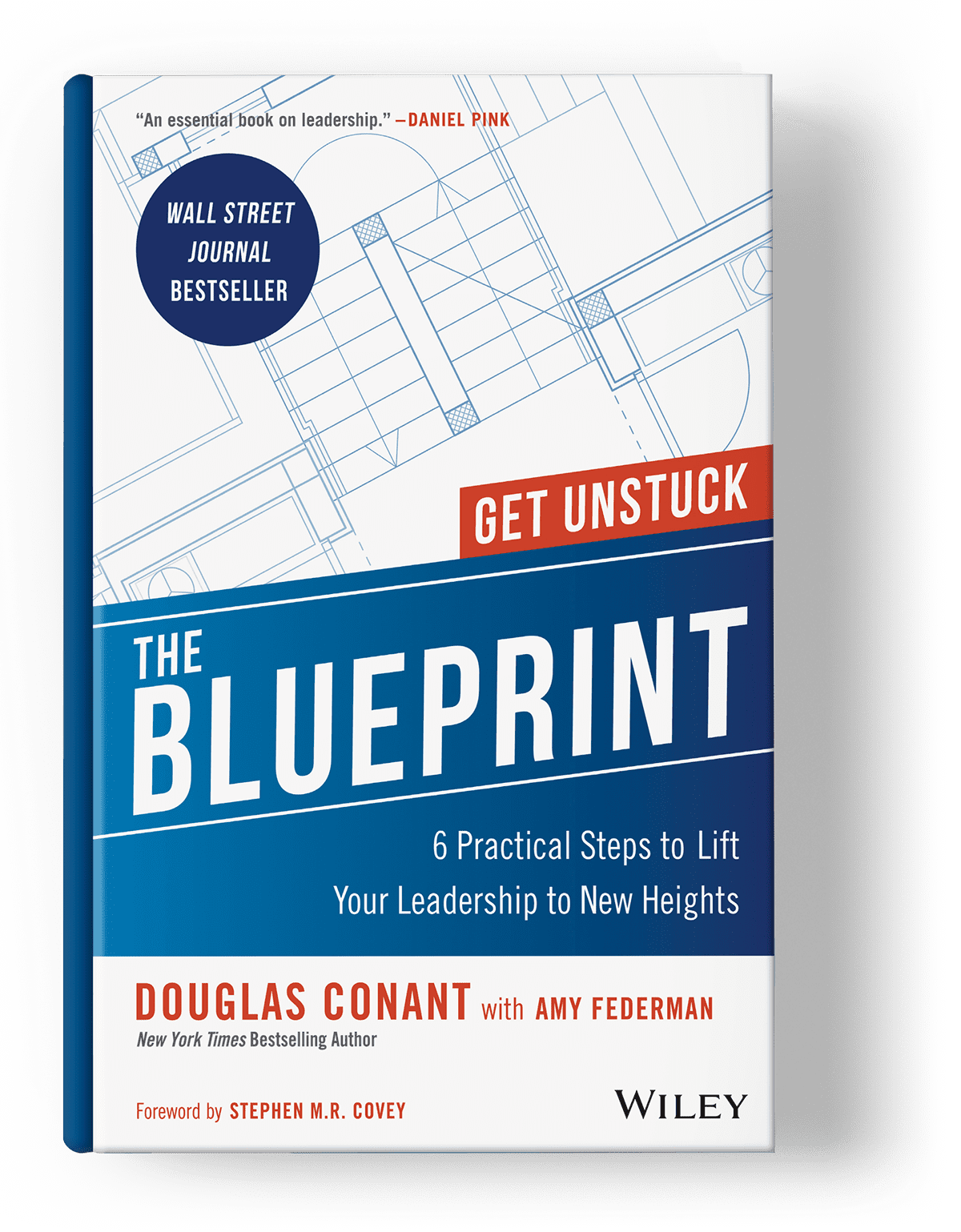
The Blueprint
6 Practical Steps to Lift Your Leadership to New Heights
By Douglas Conant with Amy Federman



Have Doug Speak at Your Event
Doug works collaboratively with event organizers to customize his material for each audience.