
 all resources & insights
What Dolly Parton Showed Us about Leaving a Legacy – The Leadership That Works Newsletter
At ConantLeadership, we’re committed to lifelong learning and continuous improvement. In service to your leadership growth, in each month’s ‘Leadership That Works’ newsletter we curate a digest of resources from around the web to:
- Share actionable advice from top leadership luminaries
- Celebrate a range of viewpoints (inclusion is not an endorsement)
- Contextualize workplace trends through a leadership lens
- Support your personal development in life, leadership, & beyond
You can subscribe to our newsletter here.
Want to work with us to lift your or your team’s leadership to new heights? Drop us a line or talk to Emma Anthony, our Director of Leadership Programs.
In this edition of the Leadership That Works Newsletter: Life lessons from the game of tennis; what Dolly Parton showed us about leaving a legacy; Galbraith’s ‘Star Model’; how to build a culture that executes; the power of ‘I don’t know’; unearthing your inner genius, and more.
New from ConantLeadership
13 Life Lessons from the Game of Tennis
In the latest piece in our ‘Golden Anniversary Collection,’ a treasury of Doug’s thought leadership, updated to help you meet the current moment as we celebrate his 50 years in leadership, he shares pivotal lessons from his time as a young tennis pro, right in time to coincide with the US Open. Find the first two pieces of advice below and then click through to read the full post.
1. Follow Your Passion. In the spring of 1966, I was cut during tryouts from the “freshman only” boys’ tennis team. This meant that 20 freshman boys (including most of my friends) were chosen ahead of me. It would have been easy to give up then and there, but I dedicated myself to following my passion for the sport, spending hundreds of hours practicing alone by hitting balls against walls in the neighborhood. By the next year, my competitive profile improved and I became one of the better junior players in the Midwest. I learned that passionately pouring yourself into a cause could yield substantial returns.
2. Redouble Your Efforts. Tolstoy was right: “Happiness does not depend on outward things, but on the way we see them.” In my case, after the setback with the boys’ freshmen tennis team, I could have chosen to walk away from the sport entirely. Instead, I redoubled my efforts. And that decision led to a series of experiences that have been life-shaping. We all have the power of choice in our lives: the power to choose our response to any and every situation. Tennis taught me to choose to make the best of every setback.
Get the full story here.
1. Follow Your Passion. In the spring of 1966, I was cut during tryouts from the “freshman only” boys’ tennis team. This meant that 20 freshman boys (including most of my friends) were chosen ahead of me. It would have been easy to give up then and there, but I dedicated myself to following my passion for the sport, spending hundreds of hours practicing alone by hitting balls against walls in the neighborhood. By the next year, my competitive profile improved and I became one of the better junior players in the Midwest. I learned that passionately pouring yourself into a cause could yield substantial returns.
2. Redouble Your Efforts. Tolstoy was right: “Happiness does not depend on outward things, but on the way we see them.” In my case, after the setback with the boys’ freshmen tennis team, I could have chosen to walk away from the sport entirely. Instead, I redoubled my efforts. And that decision led to a series of experiences that have been life-shaping. We all have the power of choice in our lives: the power to choose our response to any and every situation. Tennis taught me to choose to make the best of every setback.
Get the full story here.
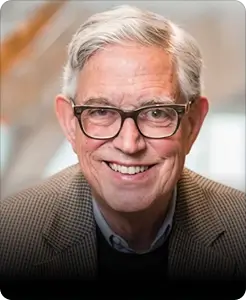 Founder’s Corner: What’s Doug Enjoying?
A snapshot of resources that our Founder & CEO, Doug Conant, has recently found insightful and/or inspiring.
ARTICLE:The Star Model™ by Jay R. Galbraith
From Doug: Jay Galbraith sadly passed away in 2014 but he was a giant in his area of leadership at MIT and beyond. His star model, which connects explicitly to the ‘Align Resources’ step in my own Higher Ground Leadership Success System, strongly influenced my work as CEO of Campbell Soup Company, and I recommend exploring it in depth. You can find Galbraith’s summary overview of the model excerpted below, then click through to read his full explanation.
Excerpt: “In the Star Model™, design policies fall into five categories. The first is strategy, which determines direction. The second is structure, which determines the location of decision-making power. The third is processes, which have to do with the flow of information; they are the means of responding to information technologies. The fourth is rewards and reward systems, which influence the motivation of people to perform and address organizational goals. The fifth category of the model is made up of policies relating to people (human resource policies), which influence and frequently define the employees’ mind-sets and skills.” Find the full resource here.
What Dolly Parton Taught Us about Leaving a Legacy
“Too many leaders think about legacy in terms of what they accomplish,” writes Marcel Schwantes in this Inc. piece, but Dolly Parton showed us, “legacy is what continues to create value for other people after your direct involvement ends.” In Parton’s words, “If you do your job right . . . it will carry on.” Looking at her incredible contributions across “music, movies, business, and philanthropy,” Schwantes identifies three lessons about leaving a legacy.
1. “Build something that gives other people opportunity.” Parton built her theme park, Dollywood, “to help families in the Appalachian community where she grew up.” She said, “I wanted to create a place where families can have fun and also to give folks good work.”
2. “Turn something personal into something bigger than yourself.” Dolly Parton’s father could not read or write so she devoted her life to helping spread literacy far and wide. She started the Imagination Library in 1995 for children in her home county in Tennessee and grew it into, “a global literacy program,” which has since “surpassed 300 million books gifted worldwide in 2025 and distributed more than 40 million books that year alone.”
3. “Turn compassion into action.” Wildfires ravaged Parton’s home county in 2016. Her foundation sprang into action, creating the “My People Fund, which provided 1k per month for six months to families who lost their homes . . . the fund ultimately distributed $8.9 million directly to wildfire victims.” Leaders do not need the same resources as Parton to follow in her footsteps; you only need to remember that, “compassion, in its true form, becomes meaningful when leaders convert it into action.”
Get the full story here.
How to Build a Culture that Executes
A common problem in many companies is that a sound, well-considered strategy loses momentum and doesn’t yield results despite a talented team and smart goals. “When this happens, we often hear the same explanation: ‘It’s a culture problem’,” writes Sandra Mohr in this Chief Learning Officer piece. Mohr says company culture provides an incomplete explanation for stalled execution: “Culture doesn’t execute strategy. People do.” She continues, “Every day, people make hundreds of decisions that determine if their organization’s strategy becomes reality.” The question becomes, “not simply whether an organization has a strong culture,” but, “whether leaders have created organizational conditions that enable people to consistently make decisions that advance the mission.” Mohr says this distinction is crucial, and shows, “why organizations with exceptionally talented people still struggle . . . people perform within environments that either support or constrain effective decision-making. When priorities are unclear, ownership is inconsistent, expertise remains isolated, or learning is treated as an occasional event rather than an ongoing capability,” even the best strategies falter. This holds true across sectors.
The good news is that successful enterprises can point us to a better way: “Organizations that consistently execute well rarely rely on extraordinary individuals alone. They intentionally create environments where people understand what matters, take ownership for outcomes, contribute their expertise, and continuously improve how work gets done. Execution becomes less dependent on heroic leadership and more dependent on organizational capability.” Leaders should stop, “viewing culture as an outcome of organizational success,” and begin instead, “to see it as an operational capability—one that can be intentionally designed, strengthened and continuously refined.” Get the full story here.
**For more on this, explore our Higher Ground Leadership Success System, a holistic approach to organizational excellence.
The Power of ‘I Don’t Know’
“We often reward a confident take, the person with the answer, the one who never flinches,” writes Danny Kenny in this Big Think post, but he says there is also immense power in admitting the limits of your knowledge: “Every time someone stands up, on a real stage or a metaphorical one, and owns a miss, something magical happens. They gain trust. They gain respect. They gain far more than they lose.” Kenny uses the example of the “soldier” versus “scout” mindset: “A soldier defends the territory and attacks whatever threatens it. Meanwhile, a scout heads out, sees what’s actually there, and draws an honest map. The soldier needs to be right. The scout needs to know what’s true.” Leaders need to be scouts, not soldiers. This requires “intellectual humility,” which is the ability to admit when you don’t know the answer or need more information. People higher in intellectual humility, “learn more, recover faster from setbacks, and tend to be trusted more by the people around them.” Leaders can practice the skill by owning up to mistakes when they get it wrong and by modeling the behavior of seeking more information before posturing as an expert. When leaders are able to say, “I don’t know,” intellectual humility spreads throughout the organization. Get the full story here.
Unearthing Your Inner Genius
“The brain you were born with contains the same learning engine as every genius who ever lived,” writes Josh Turknett, a neurologist and founder of the Institute for Performance Neurology, in this excerpt from his new book, The Genius and The Impostor: The Neuroscience of Unlocking Human Potential. Turknett shares five science-backed tips for unleashing your inner genius, and here are the first two.
1. You are already a genius, but you’re blind to it. “As you read these words, your brain is pulling off an insanely complex task. It’s taking a continuous stream of symbols and slicing them into identifiable chunks called words. . . Why are we so prone to underestimating ourselves? Because the brain builds expertise by building problem-solving circuits. When those circuits are built, they stop requiring conscious effort. The better we become at something, the less effort we feel, and we mistakenly equate that effortlessness with simplicity. But effortlessness is not a sign of simplicity. It’s a reflection of mastery.”
2. Extraordinary minds are built from ordinary brains. The quintessential genius, Einstein, famously said, “I have no special talents. I am only passionately curious.” Einstein, “believed that genius didn’t arise from special hardware, but from how he’d used the hardware we all possess. Neuroscience backs him up. When you get down to the level of neurons and networks, learning the piano, the two-step, or theoretical physics is enabled by the same exact processes. All of our extraordinary cognitive abilities are built through the same learning engine that exists inside every brain. That learning engine is your genius, and it never leaves you.” Get the full story here.
More from ConantLeadership
50 Years of Leadership →One System for Success
Introducing the Higher Ground Leadership Success System™
ConantLeadership Founder, Doug Conant, has turned everything he learned running Fortune 500 companies, across decades, into one leadership system, organized around two pillars of DEPTH and REACH. The system is now yours to explore in a new article in Leader to Leader and in our free four-week email mini-course. Read an excerpt from the article below or click through to get the full story.
Excerpt: “In 1976, on my first day of work at General Mills, I was completely out of my depth. Oblivious to the culture of the corporate world, I roamed the halls in my tan suit, brushing my overgrown curly hair out of my eyes. I didn’t look the part of a product marketing manager, and I didn’t feel the part either. I’d moved to Minneapolis to take the job, uprooting my whole life, and I didn’t know a soul. Untethered, I was a fish out of water. As I tried to find my way through the labyrinth of office doors, a friendly older man stopped me and asked if I was lost. “Yes,” I answered, and I meant it in every sense of the word. Thankfully, he pointed me in the right direction, and that small act of kindness changed the trajectory of my entire career.” Get the full story here.
Leadership Lessons from a Near-Fatal Car Accident
The Latest from our Golden Anniversary Collection
An excerpt:Throughout my stay in the hospital, there was an around-the-clock army of nurses, doctors, and support staff caring for me. They would check on me, ask about my pain, diligently tend to my wellness, listen to my responses, and course-correct my treatment.
What’s fascinating is that I could always tell the most adept and experienced personnel apart from the others because of one important differentiator: Every time the most engaged caretakers would visit my room, they would always approach me with an unmistakable, sleeves rolled-up spirit of, “How can I help?”
The best helpers were fully present in their interactions with me—not nervous, hesitant, or withholding. They were self-assured, compassionate, and generous with their time, attention, and knowledge. In a nutshell, I came to understand that the best professionals are often the kindest professionals. Get the full story here.
Watch: Doug Conant on the ‘Grit in the Boardroom’
In this conversation, host Erika Eliasson-Norris, CEO of Beyond Governance, speaks with Doug Conant about how to rebuild trust and reinvigorate a struggling corporate culture.
Listen: Doug Conant on the ‘One of One’ Podcast
In this conversation, host Darren Gold and guest Doug Conant explore what it really means to be tough minded on standards and kind-hearted with people, and what 50 years in the arena has taught Doug about the inner work that great leadership demands.
Find Your Leadership Vocabulary with Doug Conant
In this follow-up to our first LinkedIn Learning course, Finding Your Leadership Purpose with Doug Conant, (which has reached over 90,000 learners), join Doug in this learning pathway as he guides you through the important work of articulating your leadership beliefs and crystallizing them into a Leadership Vocabulary that you can use to influence others more effectively. Check out the course here.
July‘s Leadership That Works Newsletter
In last month’s newsletter: Offer yourself to the world; seek truth, not persuasion; how to make a product people actually care about; create small moments of recognition; pressure test your leadership message, and more.
 About the Author: Amy Federman is ConantLeadership’s Director of Content and Editor in Chief, and co-author with Doug Conant of the WSJ bestseller, The Blueprint.
(Header Photo by YuguDesign on Unsplash)

“Doug Conant is remarkable—and so is this work.“
– Stephen M. R. Covey
Author of The Speed of Trust
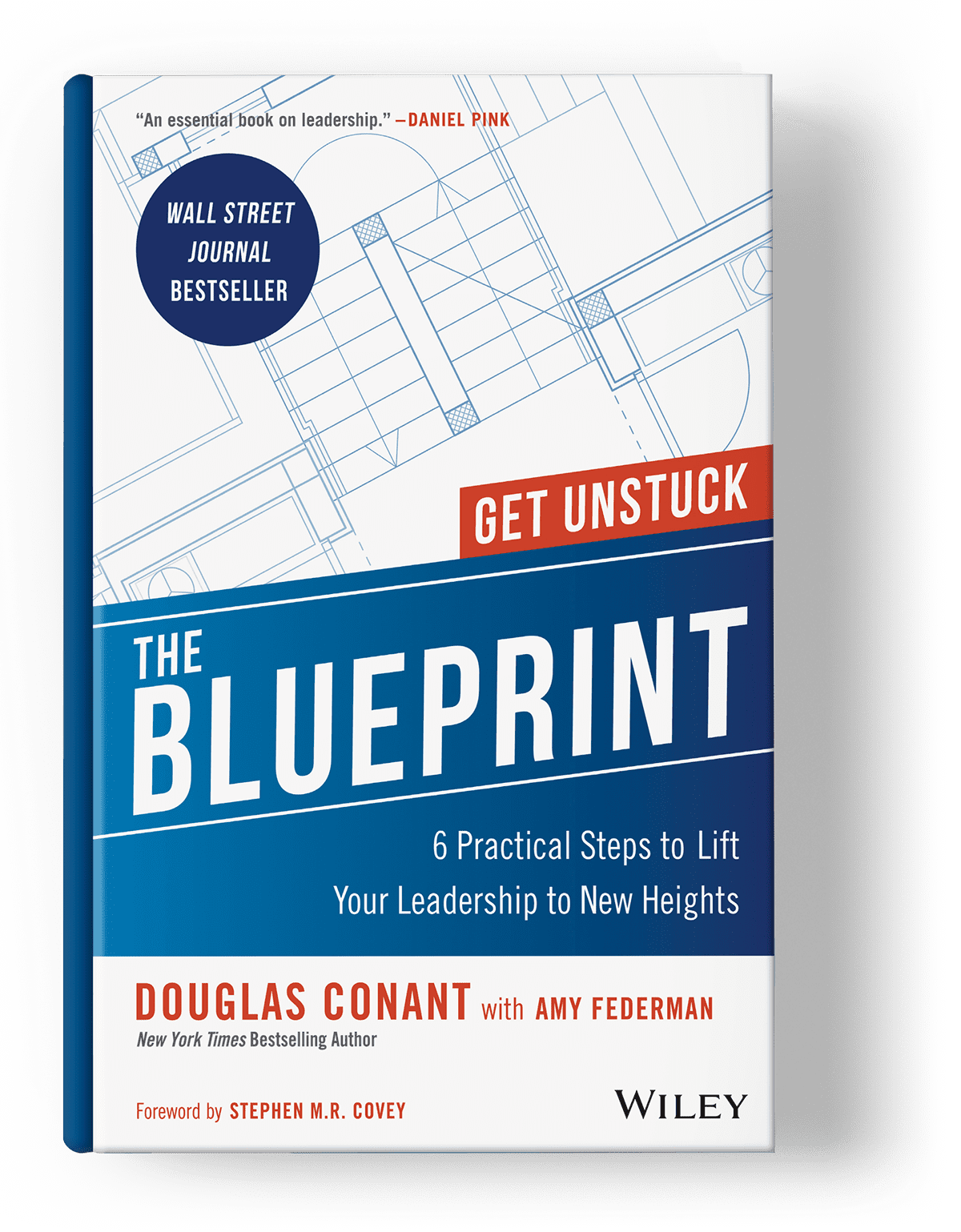
The Blueprint
6 Practical Steps to Lift Your Leadership to New Heights
By Douglas Conant with Amy Federman


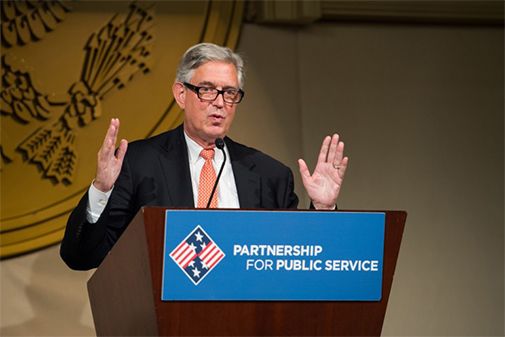
Have Doug Speak at Your Event
Doug works collaboratively with event organizers to customize his material for each audience.